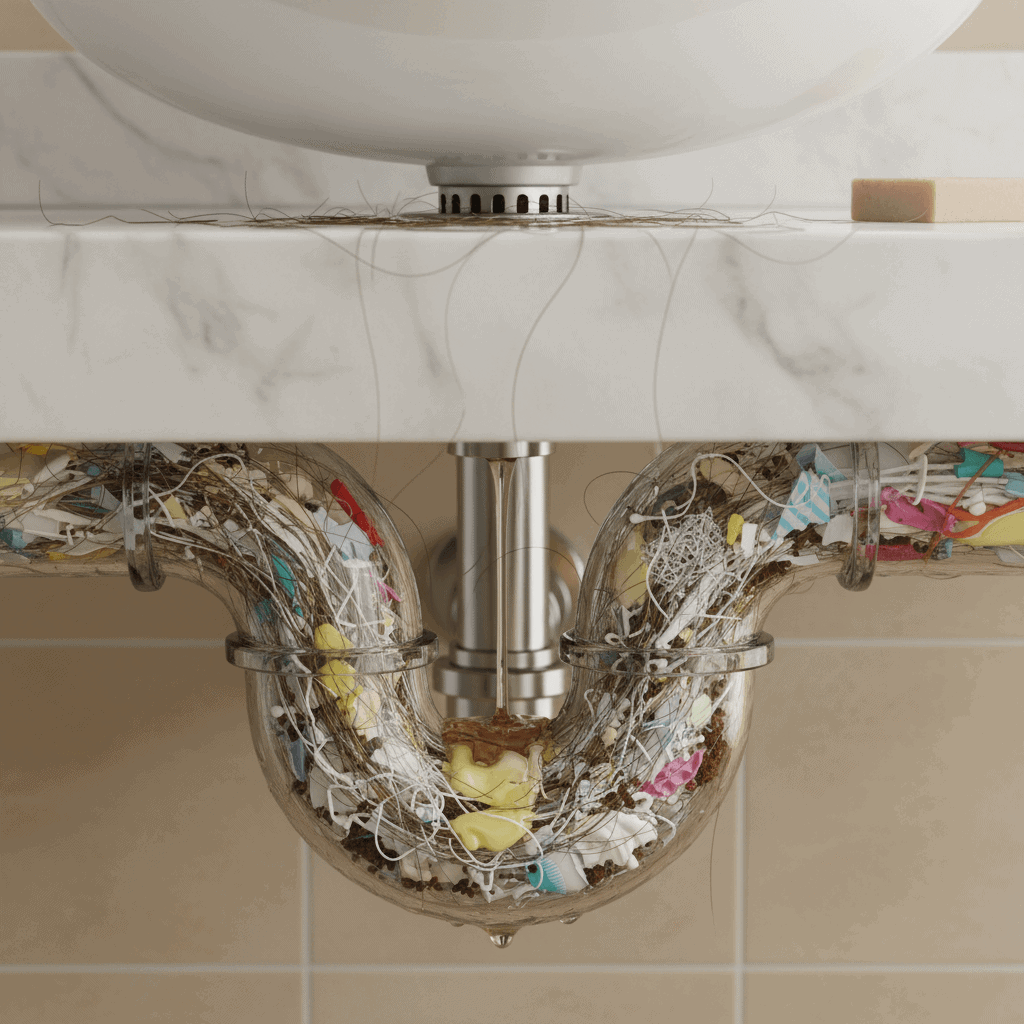
Clogged drains are one of those home maintenance problems that start small then come back again and again. They slow water, cause odors, and in some cases lead to backups that damage floors and cabinets. Understanding the root causes helps you choose the right fix and avoid repeating the same mistake.
This article walks through the most frequent reasons drains get blocked on an ongoing basis. You will find clear examples, hands on tips, and guidance on when a home solution is enough and when it makes sense to call in trained professionals.
Causes of ongoing drain clogs and how they interact
Blockages rarely have a single cause. Often several factors combine to reduce flow until water can no longer pass freely. For example a narrow pipe that has a small deposit buildup will trap food scraps and grease more readily than a wide, clean pipe. Over time these items form a mat that captures hair and lint and the problem grows.
Understanding how common causes work together helps prioritize fixes. Removing surface debris may restore flow temporarily while the underlying buildup remains. Address the source of debris and the interior condition of the pipe for a lasting result.
Kitchen culprits that lead to repeat clogs
Kitchens are prime locations for recurring blockages because of the mix of solids, fats, and fibers that enter the drain. Here are the most frequent kitchen offenders and practical steps you can take.
Grease oil and fat accumulation
Warmed fats and cooking oil flow down the drain as liquids then cool and harden on pipe walls. Over weeks and months these congealed layers trap food particles and form thick obstructions. A single greasy pour may not cause a full stop but repeated small amounts build an interior coating that narrows the effective pipe diameter.
Tip: Let oils cool and collect them in a container for disposal with household trash rather than into the sink. Wipe greasy pans with a paper towel before rinsing.
Food scraps coffee grounds and starchy residue
Certain foods create more trouble than others. Rice and pasta swell when wet and can clump together. Coffee grounds do not dissolve and tend to bind into gritty masses. Fibrous peels from vegetables and potato skins wrap around pipe bends and trap other debris.
Tip: Use a sink strainer and empty it into the trash after each meal. Avoid putting large solids into a garbage disposal as that can push debris further into the drain system.
Bathroom and laundry sources of recurring blockages
Bathrooms and laundry rooms introduce a different mix of materials into plumbing. Hair, soap residue, fabric fibers, and personal care products interact to create clogs that are tricky to remove.
Hair strands form long tangles that easily snag soap scum and mineral deposits. When hair accumulates at a trap or bend a small mat forms and the flow slows. At that point more sediment and grease join the mat and growth accelerates.
Tip: Install hair catchers in shower drains and clean them regularly. For laundry, use high efficiency settings to reduce lint and empty the dryer lint trap after each load. Never flush wet wipes or diaper materials even if the package says flushable.
Tree roots and aging pipes that cause repeat issues
Outside the home a different set of factors can create recurring backups. Tree roots seek moisture and oxygen. When they find a small crack or joint in a sewer line they will grow into it and expand. Roots may first cause minor flow restriction then rapidly turn into a major obstruction or fracture the pipe.
Old clay or cast iron pipes are more vulnerable. Soil shifting and long term wear create cracks and separated joints that invite intrusion. Once roots enter a line, simple snaking provides temporary relief but the roots will return unless the damaged section is repaired or replaced.
Mineral buildup corrosion and scale in hard water areas
Hard water contains dissolved minerals that precipitate out and form scale on pipe interiors and fixtures. Over years the scale layer reduces the internal diameter of pipes, making them more sensitive to blockages from normal debris. In addition scale offers rough surfaces where grease and hair adhere more easily.
Corrosion in older metal pipes creates rough spots and pitting that can trap particles and accelerate clog formation. If sections of pipe are heavily corroded, the only long term option may be replacement to restore reliable flow.
Tip: If you live in a hard water area consider a water softening option or periodic descaling treatments for drains. A plumber can inspect lines with a camera and advise on repair versus replacement based on the degree of scale or corrosion.
Common DIY mistakes that make clogs come back and when to call a pro
Well intended home remedies sometimes do more harm than good. A few missteps are especially likely to turn a fix into a repeat problem.
- Pouring chemical drain cleaners into a partially blocked pipe can soften organic matter then leave a hardened residue that is harder to remove. Strong chemicals also damage older pipes and harm septic systems.
- Using a plunger on a kitchen sink with a disposal can push debris further into the sewer line where it forms a tougher obstruction.
- Overusing the garbage disposal to grind fibrous or starchy items leads to fine particulate that lodges in dips and joints beyond where the disposal reaches.
When clogs return despite careful maintenance there may be an underlying problem such as a broken trap, a shifted joint, or root intrusion. At that point a professional evaluation saves time and expense by targeting the real issue rather than chasing symptoms. For many homeowners a scheduled video inspection and targeted service is the quickest path back to dependable drains and toilets.
If you find clogs reappearing or need an expert opinion consider scheduling professional drain cleaning to identify hidden problems and restore reliable flow.
Preventative maintenance strategies that reduce recurrence
Small, regular actions prevent many major clogs. Adopt a few practical habits and pair them with occasional expert checks for the best results.
- Install and use strainers at all sink and tub drains
- Dispose of fats and oils in the trash rather than down the sink
- Limit use of the garbage disposal to small soft scraps and avoid fibrous peels
- Run hot water for 15 seconds after rinsing dishes to help carry solids through and reduce grease adhesion
- Schedule a video inspection if you notice multiple fixtures draining slowly
Tip: A routine inspection once every two years catches problems like developing root intrusion or scale buildup early. For households with older plumbing or frequent issues an annual check is a reasonable choice.
How to choose a lasting repair plan
When a recurring clog occurs, treat the incident as a diagnostic clue. If blockages happen in one fixture the problem is often localized near that trap or branch line. If multiple fixtures are affected simultaneously the main sewer line or a common branch is the more likely culprit.
Once you know the approximate location the options range from targeted clearing to partial or full pipe replacement. Simple clogs can be cleared and the pipes cleaned with rotary tools that remove both roots and hardened deposits. For cracked or collapsed lines, trenchless repair techniques replace the damaged length without full excavation in many cases.
Ask contractors about inspection reports and follow up recommendations. A written plan that describes the cause and the proposed repair gives you confidence in the approach and helps avoid returning problems.
Clogs that keep coming back frustrate homeowners and add to maintenance costs. Many repeat issues are avoidable with the right habits and timely inspection. Look for the origin of debris and the condition of the pipes, then choose fixes that address both surface blockage and underlying damage. If you have recurring trouble contact a qualified service for a diagnostic inspection and treatment plan. A timely visit restores normal flow and reduces the chance of damage to floors and cabinets. Make a plan today to stop repeat clogs and protect your plumbing long term.